The line was long at the post office and all I could think of were the numerous other errands still in front of me. There just didn’t seem to be enough time in the day to accomplish everything that needed to be done. I was about midway up to the window and feeling a little exasperated with all the waiting when I heard a pleasant jingling behind me.
 I turned and saw an elderly man wearing pressed Wranglers, a khaki workshirt also ironed smartly, and a worn but still proud brown vest. On his feet were well lived boots, the kind with the fit you can only get by wearing them day after day. The jingling I heard came from the spurs on those boots.
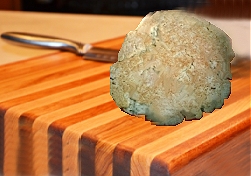
“Pan de campo?” He queried the people at the of the back of the line. In his hands he had large, wrapped rounds of pan de campo, camp bread, that was still warm. He was selling them. His straw cowboy hat was under his arm. He spoke genially to the people in Spanish, asking them how their day was going, and if he knew them, more questions about their families.
I recognized him as Lolo, a man who is legendary in our parts for his cowboy work and his talents in making horsehair braided hat and watch bands, leather belts, and other ranch arts. His spine was a bit crooked, no doubt a result of the rigors of a lifetime of riding horseback every day of every week almost from the time he learned to walk. He stepped forward with a limp, and I noticed his fingers were gnarled. I remembered reading in an article about him that he said he’d broken every finger on both hands at least twice, mostly from roping cattle.
I heard him tell one of the men behind me that he’d already been out for a good ride that morning. In Spanish, he laughed as he said, “Macho and I are both old, so we can take our time. He still loves to get out, and although it takes me a little longer to get the saddle on his back, he doesn’t seem to mind.”
The pan de campo he was selling is traditionally made in a skillet or dutch oven over an open fire. Cowboys ate it on the range as a quick and filling breakfast, sometimes stuffed with sausage or bacon. People today still enjoy it as a side to any meal.
He reached the woman behind me, obviously a relative of his. “Tio, how is tia?” she asked him.
“Well, you know, she has her good days and her bad days. But every day we wake up is a blessing.” They finished their conversation and I was happy he still had one left for me to buy.
We chatted a bit and I asked him about his pan de campo making. “Times are tough everywhere. I’ve seen times like this before, and I know they will get better; they always do. In the meantime, I remember what my mama used to tell us. ‘Good, hot food can always make a person forget about their troubles, even for just a little bit.’ If I can make someone forget about their troubles this morning with my pan de campo, then I will be a happy man.”
With a nod of his head and a smile to me, he made his way back to the door. He paused and affixed his hat back on his head and slowly made his way out and down the steps. I watched him with his limp and his slightly bow legged stance until he was out of sight, his spurs still jingling. The warmth of the pan de campo reminded me he was right.


A wonderful story filled with rich regional flavors. I can close my eyes and see this old fellow and I can almost smell the warm bread. Excellent writing.
What a well-written story. I enjoyed it so much. I hope you publish more work by this writer. Thanks for including the recipes.
This writer can tell a story and make you feel as though you are there. She has painted a very graphic picture for me of the old man with his cowboy attire and the bread. The pan de campo sounds like a real comfort food.
The lines at our post office are always long. How nice it would be to have him standing in line with us.
Another great story from the pen of a great writer! Thanks for posting it!
What a wonderful story. It left me with a lump in my throat for all those getting older with their aches and pains from a lifetime of hard work – but still with their dignity and humanity intact. Beautiful.
What a sweet story! I think I would have wanted to be waiting in that line to have the chance to buy some of this pan de camp; it sounds delicious!
betty
What a lovely story my friend! I am such a fan of your prose. How fortunate we are that you are gifted with a talent to make words dance in our heads, painting a lovely mural of life.
Hugs~
Such an engaging slice of life story about a regional character. This writer can certainly paint a word picture.
I love stories that bring out the best in us. I especially appreciate stories that highlight the simplicity of kindness. Kindness doesn’t have to be a huge charitable donation or a big project. It can be a brief exchange between people on their way to doing something else. Stories like these remind me to slow down and take notice of the people around me and to recognize the details. These moments of interaction between people out doing errands are gifts in themselves. I’m going to try to reach out more to people I don’t know during my holiday adventures.
Shelly, you know I always enjoy your prose and writing gift!! You open a door to so many interesting bits of history and life to those who wouldn’t know otherwise.
This is the first time in my life I’ve wished I was in line at the post office, and I was thrilled to see the recipe included! I’ll be trying my hand at pan de campo today. Just lovely, Shelly.
Every month, bring this writer back every month.
This is a wonderful, descriptive piece of writing, which I really enjoyed. The writer really brought the story to life, and I could just imagine myself in that post office queue and smelling the newly baked bread. Well done Shelly.
Love this story, I love the descriptions you give the reader, it made me feel as if I were in line with you, I can even feel the warm pan de campo!! (my mouth is watering!)
I love his story, reminds us to remember that everyone has a story.
What a great story with such beautiful description! I love how the mood changed from the rush of the day to the richness of such a simple yet beautiful moment!
I was standing there in line at the post office and could almost smell the bread and hear the spurs. 🙂
Love this and now I’m hungry, too. You have a beautiful talent for seeing good. I love that about you.
I am warm, all over, no mean feat for a below-zero day in Minneapolis. Such descriptive writing: I am there, the sun on my head, the Spanish flowing in one ear and out the other, and I am digging through my purse, my pockets, for money with which to buy some pan de campo.
Lovely writing.
Pearl
Shelly is such an exceptional writer. She brings us into a scene and there we meet people whose lives and dreams and being she reveals to us with a few words that show us humanity. Please feature more of her stories as they touch my heart. Peace.
Thank you for suspending the holiday rush for me. A moment ago, I was holiday shopping online. Now I’m singing Christmas carols and baking frozen biscuits in the oven. No, they’re not homemade, and no they’re probably not as delicious as Lolo’s pan de campo. However, they’re as close as I’m getting this cold, late night out my way, and that’s good enough for me.
You have a beautiful way of weaving imagery, and changing tones seamlessly. I’m a fan, Shelly!
Beautifully written, so vivid and so touching! I really loved this story! It’s a great reminder that hard times come and hard times go and that we’re all greatly blessed simply to wake up each morning!
Shelly,
You always put us at the spot and in the moment of your story. Such a good point the old man made, that when times are tough, the good times will come again, just as he had seen before. Thanks for this great story.
As always Shelly, when I read your stories, I feel what you are saying. It’s like I am there with you. You are very talented and I enjoy everything you write.
He’s so right. It really is the little things. Beautiful story and a great reminder.
So many thoughts and emotions as I read. First, how special it is to meet another interesting human being. I also thought of the Spanish language and how I want to be relatively fluent with it some day. (I’m self teaching myself now… might need a class though!) And the pan de campo! I’d love a sample right now!
A wonderful story, Shelly.