Sometimes, you just have to close your eyes and jump into the abyss bolstered by a belief in luck or fate or karma. And so it was when my employer asked me, and by extension my husband, to move to Bratislava, Slovakia nearly three years ago. Although neither of us had ever visited Slovakia – let’s face it, we had barely heard of Bratislava – we agreed sight unseen. 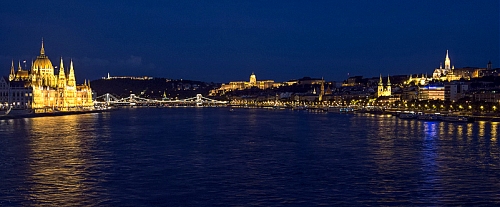 With our daughter starting her sophomore year in college; our two sons grown and living on the east coast; and our rambling house way too large for us to maintain; downsizing was inevitable. Months later, work permit in hand, cars and most possessions sold, dog assigned to a new master, house listed for sale; we left with some amount of fanfare ultimately fading to no more than a white streak across a Colorado blue ski as we jetted off to parts unknown. Eighteen months later, the process repeated itself – destination Budapest, Hungary. We settled into our 800 square foot apartment overlooking the Danube in March of 2013. We were a long way from Evergreen, Colorado.
After procrastinating this blog post on life in Budapest for weeks, I began to write in fits and starts. Distilling this city, our new life, and all of the changes of the last three years is an impossible feat. Frustrated, I grabbed a pen and scrap of paper and pushed away from my computer. Without thinking, I scribbled the first ten words I associate with Budapest: “cheap, proud, opulent, dirty, music, baths, rebuilding, Paris, empire, communism” For a moment, I was tempted to say, “There, I’m done.”. Because honestly, this may be the best summary I can provide of a city we now sum up in a single word: home.
Hungarian history is rich and deep and complicated, molded by the most powerful empires of the last two thousand years, fashioned after Haussmann’s Paris, then torn apart and remolded by two world wars and an uninvited occupation. All of these influences are found within Budapest today: Roman ruins, Turkish baths, Habsburg opulence, bullet riddled buildings; boarded up synagogues and plaster facades paying tribute to the working class. These influences are important to understand, as all of them went into creating this multifarious city and shaping its enigmatic people. When I’m stymied or frustrated by a negative word or lack of help, an abundance of seemingly meaningless paperwork; 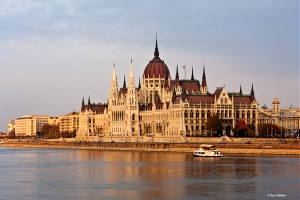 I remind myself of this past, take a deep breathe and calibrate my reactions. Hungarian life has not been easy. For Hungarians, it still isn’t.
Yet our life is simple now. Our apartment is perfectly sized, warm and comfortable; aged parquet floors, high ceilings with inlay and molding, French doors which open to a Danube facing balcony off our bedroom. Dotted throughout the city are small fruits and vegetable stands with vendors selling a selection of locally grown, tree ripened and seasonal produce at surprisingly low prices. Nearly every day, given our teeny refrigerator and limited storage space, I shop. With my basket dangling from my arm I stop at the produce vendor. I then meander through our neighborhood buying cheese from the cheese man, wine at a wine shop, humus at a middle eastern deli. We never push a cart through a grocery store stockpiling food for a week or more. And of course I never buy more than I can tote home using my two hands and two feet.


Had the best hot chocolate of my life in Bratislava! We loved the markets in Budapest and are coming back this June for a second look. Nicely written piece, thank you.
Ms. Callahan, thank you for sharing your experiences living in Budapest. I had been there once. I’m planning to make the move by next September 2015. I’m looking on renting a small apartment around the districts V or VI. Would you please advise about the cost? or perhaps suggest a link where I can get information?
I do live in Denver and we have snow, up in the mountains, already. Last week Hwy. 70 was closed around Aspen because the same reason.
Thank you for your Attention, Wilfredo
We visited London earlier this year (2014) and the prices… everything was virtually out of reach. The most modest of apartments found on airbnb was $180 a night. We had visited Budapest for a week some years ago and really enjoyed it all. So I did an airbnb for Budapest and found an apartment beautifully situated for $49 a night. We already know the Budapest transport is cheap and efficient, and our shopping in public markets were terrific fun. And the music events are extensive and amazing, and also inexpensive. We’re going to schedule another visit for next summer 2015. Maybe retirement… who knows.
should give you a hint about the prices:
http://realestatehungary.hu/szukites/kiado+lakas+v-ker+vi-ker+v-vi-ker
I’m an American living in Asia and debating about Hungary for retirement. I can’t find anything about a retirement visa or permanent without tied to work or refugee.
What type of visa were you able to get since you aren’t EU or EEA? Is it permanent or something that has to be renewed yearly.
Thanks!
HI! i was born in HUNGARY! PLANING TO RELOCATE TO BUDAPEST!!
i left budapest november 1956. Served 20yrs in theUS ARMY,also i’m
100% DAV WITH PTSD.
i haven’t visited HUNGARY since 1956! planing to relocate to my city!
ANY INFO YOU CAN GIVE ME. BUYING A HOUSE,RENTING, BANKING,
MEDICAL?
OWNING A CAR AND WHAT EVER MORE.
THANK YOU VERY MUCH FOR UR HELP!!!
MIKLOS ( NICK )
Hi…my mother in law lives in Szombathely. She unfortunately recently lost her husband and now is all alone in a house too big for her.
Is there such a thing as a retirement community like they have in the US. Where retires live together in an apartment building with access to nurses and community center, swimming pool, tennis courts etc to live out there golden years?
People I lived in Hungary for 2 years, belive me the language is very,very difficult. I moved to Croatia.
It is such a well-written piece, even as a native Hungarian it was a pleasure to read it. Let me make a very polite remark: Hapbsurg should be spelt: Habsburg. (thank you it has been corrected, admin)
Hi Miklos (Nick))
Go to the Hungarian Embassy near you with your hungarian birth certificate and apply for the hungarian passport.
With your passport you are on your way back home to Hungary.
I will do the same when i retire from Brisbane, Australia.
See you in Budapest.
Cheers,
Gizus
Thanks for your article, I enjoyed reading it very much. I lived in Budapest for a number of years and will be moving back to Hungary to retire in 3 more years. I agree with your observations in that it is a magical country filled with a long and varied past. This has all added to the Magyar quilt that makes Hungary what it is today. Whether it is the charm and vibrant inner city of Budapest, the shores of the Balaton, the villages dotting the pusta or the near Austrian feelings in Sopron – it is a magical place indeed.
Hungarian resident with my American husband just came back to live in Budapest after many years.
Allow us to assist your needs and information on retiring to this beautiful city.
We have a luxury automobile for travel assistance and eager to help fellow Americans.
Here’s my contact email address kfa71toyota@comcast.net