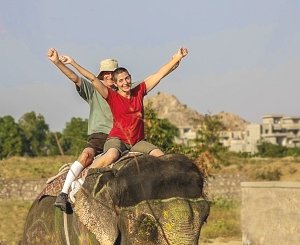
 We have been living a nomadic life for almost four years now. We’ve traveled to 24 different countries and usually spend six months at a time overseas in various parts of the world, ranging from Italy and Spain to South America to the South Pacific islands of Samoa and Fiji, to India and Southeast Asia, to Australia and New Zealand.
We are regularly asked about health insurance for our travels. We are fortunate in that the provincial medical plan in our home province in Canada will pay a portion of any necessary medical care we require while overseas. The amount they will reimburse is roughly equal to the cost of medical care in developing countries so we tend to not buy extra insurance in this case. If we need medical care we pay for it and claim it back from our provincial health provider. On the other hand if we are going to western countries we do buy extra insurance because the cost of medical care is so much more expensive. It’s the main reason we don’t spend extended time travelling in the US although we would love to do that.
We used to buy travel medical insurance coverage for all of our travels, but when Don turned 70 in October 2012 the cost for him skyrocketed, and as we were planning to travel for months at a time we looked around for alternative solutions. Our life insurance agent told us about MedJet Assist, who provide emergency repatriation service by air to a hospital of our choice in the event of illness or injuries that require hospitalization. The service for a basic Family Membership costs US$545 per year for up to two medical emergencies, and includes a companion seat if the repatriation is on a commercial flight. So far we haven’t had to use this service, but it’s reassuring to know that it is there if needed.
We also did some research online and discovered the International Association for Medical Assistance to Travelers (IAMAT), which is an organization dedicated to providing travelers with contact information about recommended physicians all over the world. There are no specific fees for this service, but an annual donation is required to obtain membership.
There have been a number of occasions over the past three years when we have found ourselves in need of medical assistance in developing countries. In each case we have received first class service at third world prices, even in countries like Laos where we had been warned ahead of time that the medical services available were so appalling that we should immediately head for Thailand if we ever needed medical care. This turned out to be far from the truth when Alison needed medical treatment in Luang Prabang: the local hospital had a special clinic for travellers, which was staffed by a Western-trained Thai doctor, and Alison received prompt and expert treatment. We’ve also needed medical care in India and Mexico and in each case received timely and excellent treatment. Alison fell and hit her head on some concrete seating at a cultural festival in a huge stadium in Oaxaca, Mexico. She received immediate medical attention at the stadium and was subsequently evaluated by a neurosurgeon at a local hospital within fifteen minutes of us arriving there. The cost of the neurosurgical consult was so minimal that we didn’t even bother to claim it back from our provincial medical plan.
 Each of us takes two prescription medications, so we make sure that we have enough of them to last for the duration of each of our trips abroad. In a pinch there are several countries, such as Mexico and India, where prescription medications are available over-the-counter for a fraction of the cost in North America.
We keep our vaccinations up to date through a travel medical clinic in Vancouver, and carry a broad-spectrum antibiotic (azithromycin) for use on those occasions when we eat or drink something that causes traveller’s diarrhea or nausea. We have a small medical kit, which includes bandaids, headache tablets, and Ibuprofen for those days when we’ve been just a bit too active, and antihistamines for any allergic reactions. We have found it is generally easy to buy basic first aid supplies such as antibiotic ointment for cuts and scrapes, bandaids, bandages, gauze pads, Ibuprofen and various over-the-counter pain medications pretty much anywhere in the world. There are pharmacies in every place we’ve been to. We also take vitamin and mineral supplements on a daily basis, which we buy before leaving Vancouver. We’ve found magnesium citrate to be very effective for combating constipation.


Thank you Alison and Don for a well written article with lots of good advice and tips, but in particular a very inspiring and uplifting post. I love your life’s motto: “life is too short to worry”, you are spot on, there is no point of worrying in particular about things you have no control over. Your positive energy and out look in life is enlightening. I love following your blog adventures in wonderland.
Thanks so much Gilda, glad you enjoyed the article, and the blog. We’ve learned much through travelling and being nomadic, especially about letting go – of stuff, of limiting ideas, and of worrying.
Dear Alison and Don,
Your blog is inspiring for my husband and me. We are about to embark on a 2-year (at least) jaunt to SE Asia. We will be 71 and 65 when we begin the trip. We’ve traveled quite a bit over the years but had to wait until we both retired to take this extended vacation.
I agree with you that age is no barrier to travel; we will just need to be more conscious of our needs and limitations. Luckily, we are both quite healthy.
We are still in process: preparing our house to rent, storing furniture, visiting family and friends before we leave, etc.. It’s presented many challenges so far and has been quite a learning experience.
A huge challenge is finding health insurance and deciding if we need it. It sounds like you decided you don’t but I’m not sure I’m that brave. Since we’re US citizens, we have no coverage past 60 days with Medicare. We have Medevac insurance through United Airlines for a year for $170 for the two of us. I”m still looking at options for emergency care, which is what I’m most concerned about.
Are you still happy with your no insurance option? Any thoughts will be welcome.
Perhaps we’ll meet up in Luang Prabang some day!
Best regards,
Catherine (and Stan)
Hello Alison and Don Thank you for all your valuable insight. Congratulations on your history and wonderful experiences. I am 67, in great health and will be starting a solo world journey in October or November. No timeline for a return. I am from Seattle and will start with first leg in New Zealand. I will be taking only a small back pack and a minimal budget of around $2K per month not counting travel and the higher costs associated with New Zealand.
I’m curious about the number of older travelers you have encountered who are going light and long term. And any suggestions for resources for older travelers. BTW I don’t consider myself old and philosophically feel the same way you both do. 🙂
Also Catherine and Stan I would be very interested in any information you have to share with regard to alternative insures ie I am also on Medicare with all the additional Parts C,D etc.
Thank you all so much for any information you can share. Have a great week wherever it takes you!
Sid